

Investment Update May 2026

Updated: Jul 2

Key Highlights:
Geopolitics remained a central driver, with the Middle East conflict raising concerns around energy security, food supply and fertiliser disruption.
Food inflation risks remained in focus, with fertiliser disruption linked to Iran and oil trading above $100.
U.S. equities delivered a strong April, with the S&P 500 rising approximately 10.4%, the Nasdaq Composite climbing around 15.3%, and the Dow Jones Industrial Average gaining about 7.1%.
U.S. market performance was supported by robust corporate earnings, a ceasefire in the Iran war and continued enthusiasm for technology and AI related stocks.
U.S. economic indicators remained mixed, with GDP growth consensus around 2.2%, CPI at approximately 3.3%, unemployment close to 4.4%, and manufacturing PMIs above 50 for four consecutive months.
U.S. Treasuries were relatively stable, as cautious economic data oUset persistent inflation concerns.
Global liquidity rose to approximately $190 trillion, supporting risk assets, particularly technology.
UK equities gained, with the FTSE 100 closing April at around 10,379, up from 10,177 at the end of March.
The UK 30-year gilt yield stabilised around 5.64%, after significant moves in the previous quarter.
The UK remained exposed to geopolitical supply shocks due to limited energy and food self-sufficiency.
European equities weakened, with the STOXX Europe 600 Index falling by around 2.5% amid rising energy prices, geopolitical tensions and softer consumer confidence.
Germany's expanding debt position and higher tariUs for Europe announced at month end were cited as additional pressures on European manufacturers.
Japanese equities were mixed but generally positive, supported by a weaker yen, resilient corporate earnings and export-oriented sectors.
Chinese equities were range-bound, with geopolitical tensions and energy security taking centre stage.
Geopolitics continued to shape market returns during April, although corporate earnings and liquidity took centre stage by month end. The ongoing conflict in the Middle East, and its impact on global food supply chains, particularly across frontier and emerging markets, has heightened concerns around both food and energy security worldwide. Increasingly, there appears to be a structural shift away from globalisation towards a more protectionist, “every nation for itself” approach to strategic resources. While various narratives continue to emerge, at a high level, the US appears to be acting strategically to consolidate its influence within global energy markets, potentially pointing towards an oil-for-debt offset dynamic. For now, markets are looking through the Iran War, pricing in a return to relative ‘normal’ in the months ahead. However, inflationary pressures are building. Let’s consider the detail.
From a geopolitical perspective, we remain vigilant to a possible break out from the relative calm of late April. Both parties currently appear to be engaged in a strategic “game of chicken”, with one side relying on domestic energy security and the other on oil storage dynamics. America appears to hold the stronger hand. Recent discussions between President Trump and Putin may add a further layer of complexity to the situation. China, meanwhile, has remained relatively disengaged, with its energy security position appearing more resilient due to diversified energy sourcing, a substantial strategic reserve and established Russian pipeline infrastructure.
The war in Iran has created significant delays in fertilisers reaching the world’s major growing regions. This gap between delivery and planting could see a food inflation problem quietly incubating across the globe. The delay between fertiliser price shocks and food inflation is usually one to three growing seasons. In the near term, existing fertiliser inventories and pre purchased contracts soften the blow, as does margin compression. Oil is now trading above $100, while physical Brent deliveries are commanding a premium, particularly across Asian markets. LNG and jet fuel markets also continue to pose potential supply side inflation risks, notably for the UK and Europe.

US equities delivered a strong performance in April 2026, supported by robust corporate earnings, a ceasefire in the Iran war, and continued enthusiasm for technology and AI related stocks. The S&P 500 rose approximately 10.4% over the month, marking its strongest monthly gain since November 2020, while the Nasdaq Composite climbed around 15.3%, its best performance since April 2020. The Dow Jones Industrial Average also advanced solidly, gaining about 7.1%, its strongest monthly rise since late 2024. Markets finished the month at fresh record highs with volatility moving lower, reflecting investors’ willingness to look through inflation risks and slowing consumer momentum as earnings growth exceeded expectations. The VIX remains near recent lows, standing at 16.91 at the time of writing. Global liquidity has now risen to approximately $190 trillion and acts as a stimulant to risk assets, particularly those with longer duration, such as technology.
US GDP growth consensus remains around 2.2%, with CPI at approximately 3.3%. Bond markets are pricing in higher near-term inflation of around 2.7%, largely driven by energy costs. Unemployment remains close to 4.4%, while the fiscal deficit is running at approximately 6.3%. Manufacturing PMIs remains above 50, for 4 consecutive months.
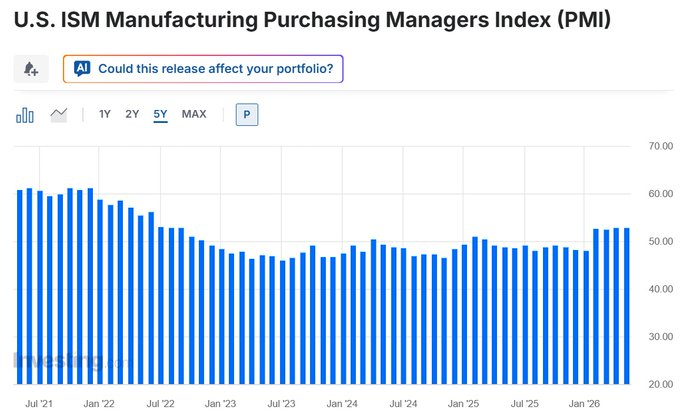
Figure 1. U.S. ISM Manufacturing Purchasing Managers Index (PMI)
Source: Daniel Lacalle, United States. Another month of both S&P and ISM manufacturing PMI > 50 (expansion). Four +50 reads in a row for ISM manufacturing. Best since 2022, X (formerly Twitter), May 2, 2026.
US Treasuries were relatively stable in April, as cautious economic data offset persistent inflation concerns. Yields moved in a narrow range, with shorter maturities anchored by expectations that the Federal Reserve would keep policy steady, while longer dated bonds saw modest volatility. Overall Treasuries remained supported by their defensive qualities amid geopolitical uncertainty.
UK equities posted a solid gain in April, supported by resilient earnings from large cap constituents and a favourable backdrop for energy and financial stocks. The FTSE 100 advanced over the month, closing April at around 10,379, up from approximately 10,177 at the end of March, as higher oil prices provided a tailwind for energy majors and a stable pound helped multinational earnings translate positively. UK bond yields experienced moves more than two standard deviations last quarter, with the 30-year gilt yield now stabilising around 5.64%. Further political instability or policy shifts could place additional upward pressure on yields. The UK also remains structurally exposed to geopolitical supply shocks given its lack of energy and food self-sufficiency. We noted some unease in shorter duration bonds reflecting inflation concerns and the probability of rate cuts being postponed, at least for now.
European equities weakened in April, as rising energy prices, geopolitical tensions, and softening consumer confidence weighed on investor sentiment. The STOXX Europe 600 Index fell by around 2.5% over the month, with most major markets including Germany, France, and Italy posting declines. Defensive sectors showed relative resilience, but overall performance reflected concerns about inflation persistence, slower growth momentum, and ongoing uncertainty surrounding the regional economic outlook. Germany’s debt continues to expand. The federal government aims to take on nearly €1tn in new debt by 2030. Interest payments are expected to rise to about €80bn, roughly double today’s level. Even accounting for additional borrowing, there is still a funding gap of at least €141bn. Higher tariffs for Europe announced by President Trump at the month end will add further pressure to Europe’s manufacturers.
Japanese equities delivered a mixed but generally positive performance in April, supported by a weaker yen and continued strength in export-oriented sectors. Investor sentiment improved as corporate earnings remained resilient and capital expenditure trends stayed firm, while expectations that the Bank of Japan would maintain an accommodative policy stance underpinned risk appetite. We note the Ministry of Finance spent $30 billion to prop up the Yen, as the currency continued to sink. The Yen’s value is important to the carry-trade and, thus, we monitor it closely.
Chinese equities posted a quieter April with range-bound performance as geopolitical tensions and energy security took centre stage.
At portfolio level, we increased our allocation to equities, particularly US equities, benefiting from the respite provided by a ceasefire alongside robust corporate performance. This has supported a strong recovery in large cap and technology indices.
We remain cautious and vigilant, as volatility driven by ongoing geopolitical risks and President Trump has not yet subsided. Portfolio performance was strong overall, with active manager selection in Core Plus portfolios contributing meaningfully; natural resources and technology were standout performers.
We look forward to updating you again next month.
Written by the Alpha Beta Partners Investment Team.
All sources Bloomberg unless stated.


