

Investment Update February 2026


We have made a solid start to the year, posting gains as the bullish rotations seen in January move into the rear‑view mirror. While there are some risk areas that warrant ongoing monitoring, the relative strength emerging in more cyclical parts of the market raises the prospect of a broadening rally and supports the case for a constructive first half of 2026.
US equity markets had a volatile, but ultimately positive January, driven by a mix of strong mega‑cap earnings, Federal Reserve policy clarity, and heightened sensitivity to AI‑related spending trends. The S&P 500 briefly crossed 7,000 for the first time during the month and finished January modestly higher, while the Dow also posted gains; the Nasdaq lagged after sharp late‑month pullbacks in software and semiconductor stocks. Investors digested a Fed decision to hold rates steady at 3.5% to 3.75%, reinforcing expectations for potential rate cuts later in 2026, even as markets reacted to leadership uncertainty around the next Fed chair. Earnings from Big Tech were a key driver, with Meta and Apple beating expectations, while Microsoft’s results, though a beat, sparked a sell‑off due to concerns about slowing cloud growth and rising AI capex, underscoring the market’s increasingly selective tone. US Treasury yields were volatile but finished January slightly higher, with the 10‑year yield ending the month around 4.25% as investors digested a Fed pause and resilient economic data.
Goods inflation remains higher than the Fed would prefer, although this can largely be attributed to tariffs. Excluding lagged effects, the headline CPI figure is within target parameters, which should be welcomed by the White House. Meanwhile, real GDP growth of around 2.3% is expected and may well trend higher as the Trump administration seek to run the economy hot. Fiscal support in the guise of further liquidity is expected to arrive in the near future – supporting the government strategy alongside risk asset prices. The new Fed Chair nominee, Kevin Warsh, besides Scott Bessent at the Treasury, is focused on supporting “Main Street” in 2026, with mid-term elections due in November. This may influence how liquidity is deployed.

Figure 1. S&P 500 Sectors - Total Return January 2026
Source: Sonders, Liz Ann (@LizAnnSonders), “January’s sector performance looks like a mirror image of 2025[...]” X (formerly Twitter), February 2, 2026, https://x.com/LizAnnSonders/status/2018311876845740272.
January provided more than one made-for-Netflix moment, giving President Trump exactly the kind of attention-grabbing spectacle he craves. It is even possible that the US operation in Caracas, the Venezuelan capital, surpassed Britain’s 38-minute war to topple the Sultan of Zanzibar in 1896. This was followed by high‑profile drama at the Davos meeting, ending with the declaration of what was heralded as a “fantastic deal” over Greenland. Elsewhere, a tentative ceasefire was agreed for one month in Ukraine. The point is, geopolitics is never easy to forecast and is certainly impossible to model into financial assets and portfolios.
European equity markets delivered a constructive start to 2026, supported by improving economic data, resilient corporate earnings, and renewed interest in cyclical sectors. The STOXX Europe 600 rose about 2.4% over the month, with strength led by banks, industrials, and selected consumer names. Meanwhile mining stocks lagged as commodity prices softened late in the period. Investor sentiment was helped by signs of economic stability in core economies such as France and Spain, alongside expectations that the European Central Bank could retain flexibility on policy as inflation pressures continued to ease. Overall, Europe began the year on a firm footing, reinforcing the case for a gradual broadening beyond last year’s narrow leadership and a more balanced market backdrop into the first half of the year.
Japanese equity markets posted strong gains in January, extending the powerful rally that carried over from late 2025. The Nikkei 225 rose more than 5% over the month, finishing near-record highs above 53,000, while the broader TOPIX also advanced, reflecting broad participation across sectors. Early momentum was driven by strength in semiconductor and AI‑related stocks, alongside continued optimism around corporate governance reforms and improving domestic demand. Sentiment was further supported by the Bank of Japan’s decision to hold policy rates steady, reinforcing the view that financial conditions remain accommodative even as gradual policy normalisation is anticipated later in the year. Japanese government bond yields rose sharply in January, with the 10‑year JGB climbing above 2.1%, its highest level in more than two decades, reflecting persistent inflation and expectations of continued policy normalisation by the Bank of Japan. Long‑dated yields were particularly volatile, as fiscal uncertainty and reduced BOJ bond purchases pushed 20‑ and 30‑year yields higher. Therefore, reinforcing the view that Japan has entered a new regime of structurally higher interest rates. Implications for higher yields must be kept under surveillance.
Here at home, UK equity markets kicked off 2026 on a strong footing, with the FTSE 100 delivering solid gains in January and briefly breaking above the 10,000 level for the first time. Performance was driven by banks, miners, energy and defence stocks, reflecting a continued rotation toward value‑oriented and globally exposed sectors, while domestically focused areas were more mixed. Investor sentiment was supported by expectations of further Bank of England easing later in the year and the UK market’s relatively attractive valuations versus global peers, reinforcing renewed international interest in London‑listed equities despite poor domestic economic stewardship with ongoing macro and geopolitical uncertainties.
Commodities delivered solid gains in January 2026, with metals leading performance as supply constraints and resilient demand underpinned prices. While volatility increased notably toward month‑end, the asset class continued to benefit from strong structural support and diversification appeal.
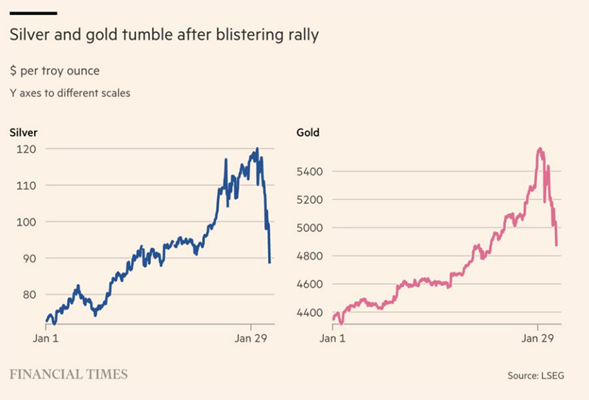
Figure 2: Silver and gold tumble after blistering rally
Source: Hook, Leslie and Smith, Ian, Gold and Silver Prices Plunge as Rally Goes into Reverse, Financial Times, January 30, 2026, https://www.ft.com/content/d3260ce9-94b5-4200-80a2-3d90e9031d98
China and emerging market equities opened the year on a constructive note, extending the momentum built in late 2025. Chinese markets advanced in January, supported by renewed policy optimism, ample liquidity, and strength in technology and innovation‑linked sectors, with both onshore A‑shares and Hong Kong–listed stocks posting gains early in the year. Across the broader emerging markets universe, equities benefited from a weaker US dollar, improving earnings expectations, and ongoing rotation into non‑US assets, allowing the MSCI Emerging Markets Index to outperform many developed peers during the month. Overall sentiment toward China and EM remained positive, with investors increasingly focused on domestic growth drivers, AI‑related supply chains, and policy support as key themes heading into 2026. A weaker US dollar, ample liquidity should support stronger capital flows and returns across emerging markets.
At the portfolio level, our positioning remained beneficial during January. We are poised to make selective changes in the month ahead, designed to rebalance the portfolio in favour of supportive policy and a weaker dollar - conditions that particularly favour emerging markets and global assets more broadly. Our 50% hedged position in US equities remains in place, as it continues to deliver tangible benefits. Fixed income remains short‑dated, offering attractive coupons and the potential for capital appreciation as further rate cuts materialise in 2026. Commodities, and metals in particular, have delivered considerable upside relative to their modest allocation, albeit alongside some recent volatility. Once this volatility subsides, the structural support underpinning the asset class should persist. Overall, we are well positioned for the early part of the year and look forward to updating you on portfolio changes in the near future.
Written by the Alpha Beta Partners Investment Team.
All sources Bloomberg unless stated.


